 Sudden Valley
 Windows Take a Different Kind of Beating in Happy Valley
Happy Valley homes sit inside a stretch of Whatcom County weather that's harder on exterior wood, vinyl, and glass than most homeowners realize until they're dealing with a soft sill or a window that won't seal anymore. You've got the marine air coming off Lake Whatcom and the broader Puget Sound region carrying salt and moisture into every crack and joint. You've got driving rain that doesn't just fall straight down but gets pushed sideways into window faces during winter storms. And you've got a moss and algae season that runs long here, feeding on any spot where water sits instead of draining. None of that is dramatic on its own, but stacked together over years, it's exactly the kind of slow damage that turns a routine window replacement into a bigger repair if it's ignored.
We're not here to scare anyone into a project they don't need. Plenty of windows in Happy Valley are doing fine and just need better weatherstripping or a caulk refresh. This page is about the homes where the windows themselves — the frame, the seal, the glass unit — have reached the point where replacement is the honest answer, and what that job should actually involve in this climate.
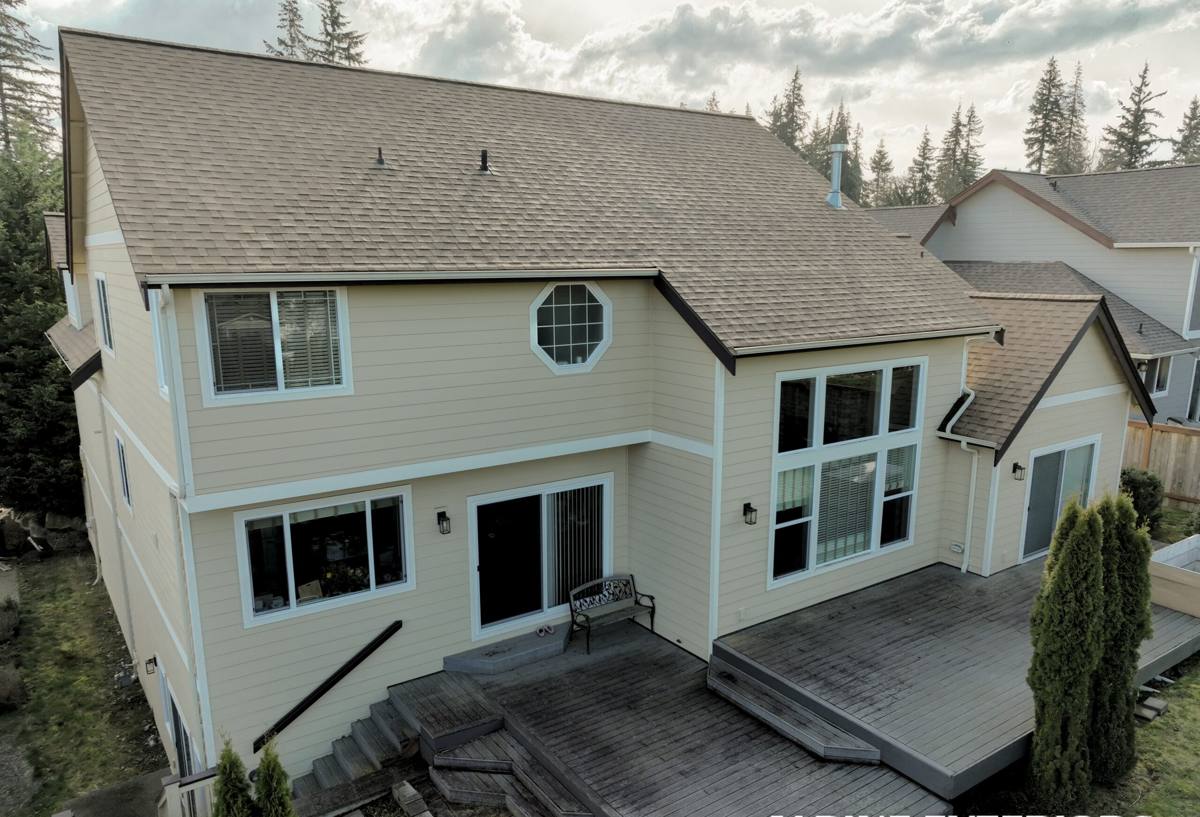
How to Tell a Window Is Actually Done
Homeowners often ask us to "just look at" a window before deciding whether to repair or replace. Here's what we're checking for, and what it usually means.
- Fogging or moisture between the panes: The seal on the insulated glass unit has failed. This isn't fixable — the glass unit has to be replaced, and often the whole window is due at that point too.
- Soft or spongy wood at the sill or lower corners: Water has been getting past the seal and sitting there. In our climate, once wood starts absorbing moisture like this, it rarely dries out enough on its own to stop the rot from spreading.
- Drafts you can feel with your hand near the frame: Sometimes this is just weatherstripping. Sometimes the frame itself has warped enough that no amount of new weatherstripping will close the gap.
- Windows that are hard to open, close, or lock: Frames swell and shift with repeated wet-dry cycles. A window that used to glide and now sticks is telling you the frame has moved.
- Visible moss or dark streaking on the sill or lower sash: This tells us water is collecting and staying wet longer than it should, which is often a sign of a drainage or slope problem at the window, not just a cosmetic issue.
What a Correct Window Replacement Looks Like Here
It's Not Just Swapping the Glass
A proper window replacement in a climate like ours is really a small waterproofing project with a window in the middle of it. The window itself matters, but the flashing, the sill pan, and the sealant details around it matter just as much — arguably more, because those are the parts that fail silently for years before anyone notices water damage inside a wall.
Our Process
- Remove the old window carefully and inspect the rough opening underneath. This is the moment we find out if there's hidden rot or past water intrusion that needs to be addressed before a new window goes in — putting a new window into a compromised opening just hides the problem for another few years.
- Repair or rebuild the opening if we find soft framing, missing flashing, or a sill that was never properly sloped to shed water outward.
- Install a sill pan and proper flashing so that any water that does get behind the siding or trim has a clear path back outside instead of soaking into the framing.
- Set the new window level, plumb, and square, shimmed correctly so it operates smoothly and seals evenly on all four sides.
- Seal and insulate around the frame using materials appropriate for our wet climate — not just a bead of caulk, but the right combination of flashing tape, backer rod, and sealant at each layer.
- Finish the exterior trim so water sheds away from the window rather than pooling against it, which matters even more here given how long our wet season runs.
Window Types and How They Hold Up in Our Climate
There's no single "best" window for every home — it depends on your home's style, your budget, and how exposed that particular wall is to wind-driven rain. Here's how the common options compare for a Happy Valley setting.
| Window Type | Moisture Performance | Maintenance | Best Fit |
|---|---|---|---|
| Vinyl | Good — won't rot, handles moisture well | Low — occasional cleaning | Most homes; strong value and durability |
| Fiberglass | Very good — dimensionally stable in wet/dry cycles | Low | Homes wanting a higher-end look with minimal upkeep |
| Wood (clad exterior) | Depends heavily on cladding and installation quality | Higher — interior wood may need periodic attention | Homes prioritizing interior wood aesthetic |
| Aluminum | Prone to condensation in our cool, damp winters | Moderate | Rarely our first recommendation for full-time residences here |
We install primarily vinyl and fiberglass windows for exposed walls in this area because they hold up to repeated wetting without the ongoing maintenance burden that painted wood exteriors require in a climate this damp. That's a practical call based on what we've seen perform well over time in Whatcom County conditions — not a knock on wood windows generally, which can be a good choice on more sheltered elevations or for homeowners who are committed to the upkeep.
Glass Package Matters More Than People Expect
Double-pane, low-E glass is the baseline we'd recommend for any Happy Valley home. Beyond that, argon gas fill and a slightly warmer or cooler low-E coating can be worth discussing depending on which direction your windows face and how much of the year you're running heat versus trying to keep a room cool. We'll walk through the trade-offs for your specific windows rather than pushing a one-size upgrade.
Why the Salt Air and Moss Season Change the Math
A window replacement done the same way in a drier inland climate can still fail early once it's installed on a home exposed to Lake Whatcom's moisture and the region's salt-laden air. Metal hardware corrodes faster. Sealants break down sooner if they're not rated for constant UV and moisture cycling. And any spot where water can collect instead of drain — a poorly sloped sill, a gap in flashing — becomes a moss and algae magnet within a season or two, which then holds even more moisture against the window. This is why we don't treat flashing and drainage details as optional extras. In this climate, they're the difference between a window that lasts and one that needs attention again in five years.
Cost Factors for Happy Valley Homeowners
We're not going to quote a number here that doesn't mean anything without seeing your windows, but these are the factors that actually move the price on a real job:
| Factor | Why It Matters |
|---|---|
| Number and size of windows | Straightforward — more glass, more labor and material |
| Condition of the rough opening | Rot repair or reframing adds time before installation can even start |
| Window material and glass package | Vinyl vs. fiberglass vs. wood, plus glass upgrades, shift material cost |
| Access and elevation | Second-story or hard-to-reach windows need more setup and safety equipment |
| Trim and siding tie-in | Matching existing trim or siding around the new window can add finish work |
Broadly, homeowners should expect a range depending on these factors rather than a flat per-window price — which is exactly why we walk the job in person before giving you a real number.
Timing Your Replacement Around Our Weather
Window replacement can technically happen year-round, but there's a reason most contractors in this region prefer the drier stretches of the year for this work. An open rough opening needs to stay dry during installation, and a rushed job done between rainstorms is more likely to have a flashing detail missed. If your window has failed and can't wait, we'll tarp and protect the opening properly and get it done regardless of season — but if you're planning ahead, scheduling during a drier window in the calendar gives us more margin to do it right the first time.
Why Hire a Crew That Already Works in Happy Valley
A window replacement is only as good as the installer's attention to the details that don't show up in a sales brochure — sill pan flashing, correct shimming, sealant choice, trim tie-in. Crews who work regularly in Sudden Valley and the surrounding Whatcom County area have already seen how these details play out over years in this specific climate, not a generic weather assumption. We know what a window that's failed after five years around here typically has in common, and we build our process to avoid repeating those same mistakes. That local pattern recognition is worth more than any brand name on the window itself.
A window replacement here is also rarely just a window job in isolation — it usually touches the siding, trim, and sometimes flashing that ties into the rest of the exterior. Working with a crew that handles siding and exteriors broadly means those connections get done as one coordinated job instead of getting handed off between separate trades who aren't talking to each other about how the water management ties together.
Get a Straight Answer About Your Windows
If you're not sure whether your Happy Valley home needs window replacement or just some maintenance, we're happy to take a look and tell you honestly which one it is. We offer free, no-pressure estimates — come find out what your windows actually need before you decide anything.