 Sudden Valley
 Siding in Sehome: Built for What the Climate Actually Does to a House
Homes around Sehome and the broader Sudden Valley area sit in one of the more demanding exterior environments in Western Washington. It isn't dramatic weather — no hailstorms, no hurricane-force wind most years — it's the slow, constant kind of exposure that wears siding down over a decade instead of a season. Salt-laden air moving in off the water, driving rain that hits siding at an angle instead of straight down, and a moss season that can stretch from fall through spring all combine to shorten the life of the wrong siding material. Siding installation here isn't just about appearance. It's about choosing a product and installation method that can actually stand up to that combination, year after year, without constant homeowner intervention.
This page is about one thing specifically: what a correct siding installation looks like for a Sehome-area home, why the material matters as much as the labor, and what our process looks like when we do the work.
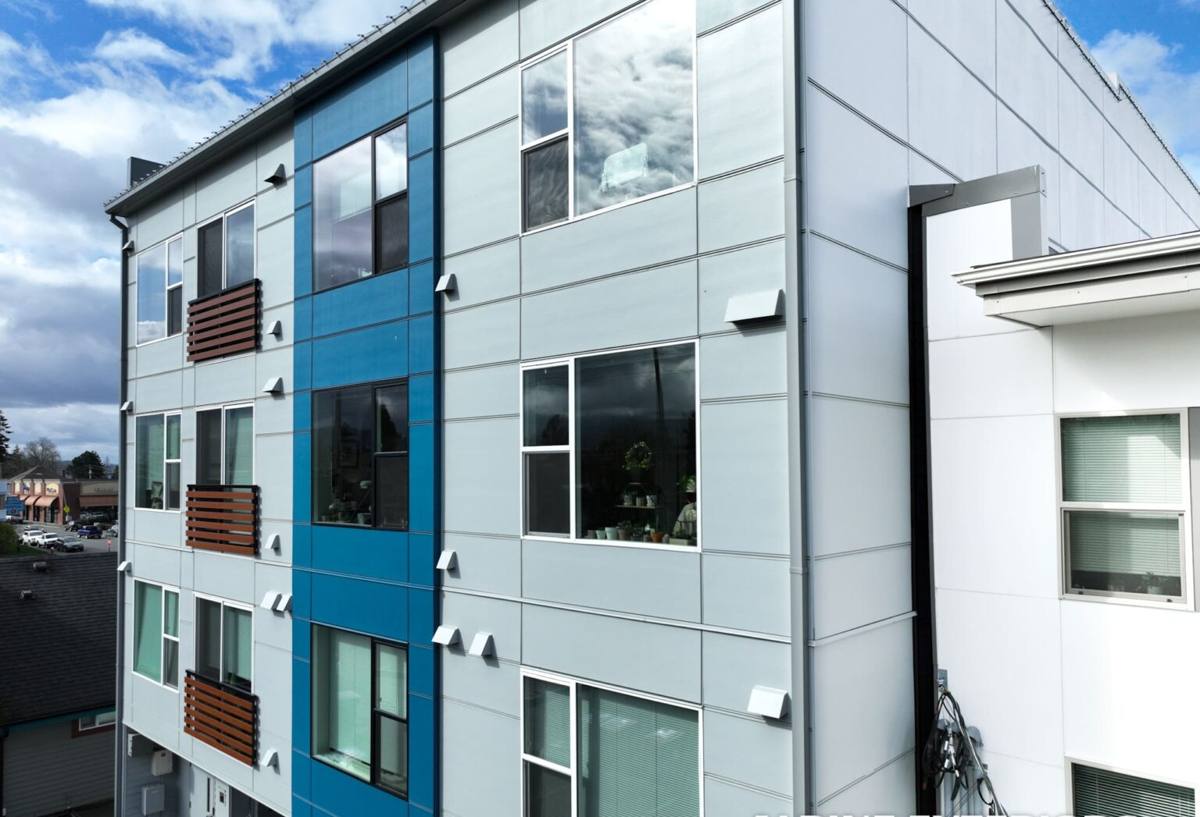
What Whatcom County Weather Does to Siding Over Time
Three factors do most of the damage locally, and they compound each other:
- Salt air: Airborne salt accelerates corrosion of fasteners and metal trim, and it can degrade certain coatings and finishes faster than manufacturers' standard testing accounts for.
- Driving rain: Wind-driven rain doesn't just wet the surface of siding — it pushes moisture up under laps, into seams, and behind trim if the installation wasn't detailed correctly. Over years, that's how rot starts, even on a product that's technically water-resistant.
- Moss and organic growth: Shade, moisture, and mild temperatures make Whatcom County ideal moss territory. Moss holds moisture against a wall surface far longer than open air would, which is a slow but steady threat to any siding material that isn't dimensionally stable when wet.
None of these factors are unique to Sehome. But they're persistent here in a way that punishes shortcuts — a siding job that's "close enough" in a drier climate can fail years earlier in this one.
Why We Install Only James Hardie Fiber Cement
We standardized on James Hardie fiber cement siding for every home we work on, including in Sehome, and we don't install vinyl, LP SmartSide, primed wood, or other fiber cement brands. That's a deliberate professional decision, not a sales position, and it comes down to how each material behaves under exactly the conditions described above.
What Fiber Cement Gets Right Here
James Hardie siding is non-combustible, dimensionally stable, and engineered specifically for moisture exposure. It doesn't expand and contract with humidity the way wood-based products can, which matters directly in a climate with a long wet season. Hardie's ColorPlus factory finish is baked on under controlled conditions rather than field-applied, which gives it more consistent adhesion and fade resistance than most job-site paint jobs — a real advantage when a home is exposed to sun, salt, and rain in the same year. Hardie also produces climate-specific HZ product lines engineered for exactly this kind of Pacific Northwest moisture exposure, rather than a single generic formulation for the whole country.
The Honest Trade-Offs
Fiber cement is heavier than vinyl and more labor-intensive to install correctly — it requires specific fasteners, blade types for cutting, and clearance details that a crew unfamiliar with the product can get wrong. It costs more up front than vinyl siding. We think that cost is worth it given the alternative is re-siding, or dealing with moisture damage, well before a homeowner should have to. But we won't pretend it's the cheapest option on day one, because it isn't.
What a Correct Siding Installation Actually Involves
The siding panels themselves get most of the attention, but the majority of long-term performance is decided by what happens before and underneath them. A correct installation includes:
Weather-Resistive Barrier and Flashing
Every wall gets a properly lapped weather-resistive barrier, with flashing installed at every window, door, and horizontal trim transition so water is directed out and away from the wall assembly rather than trapped behind it. This is the step that matters most for driving-rain resistance, and it's also the step that's easiest to shortcut if a crew is moving too fast.
Proper Clearances
Hardie siding needs specific clearance from grade, roofing, decks, and other horizontal surfaces to prevent capillary draw of moisture into the bottom edge of the material. Skipping these clearances is one of the most common causes of premature siding failure, and it's invisible to a homeowner until the damage is already done.
Fastening Specific to the Product
Fiber cement requires corrosion-resistant fasteners driven to a specific depth and pattern. Given the salt air in this region, fastener quality isn't optional — the wrong fastener can start corroding and staining the siding face within a few years.
Joint and Seam Detailing
Butt joints, corners, and penetrations (vents, hose bibs, light fixtures) are where water intrusion most often starts. Each of these needs to be treated correctly at install time — sealed, flashed, or detailed per manufacturer spec — not caulked over as an afterthought.
Our Installation Process
| Stage | What Happens | Why It Matters in This Area |
|---|---|---|
| Assessment | Walk the exterior, check existing siding, trim, flashing, and any moisture or moss damage | Identifies problem areas before they're hidden behind new siding |
| Prep & Removal | Remove old siding, inspect sheathing for rot, repair as needed | Catches hidden moisture damage from years of driving rain before it's sealed in |
| Weather Barrier | Install house wrap and flashing at all penetrations and transitions | This is the actual waterproofing layer — siding is the second line of defense |
| Install | Hang James Hardie panels or lap siding per manufacturer clearance and fastening spec | Correct clearances and fasteners prevent capillary moisture damage and fastener corrosion |
| Trim & Detail | Corner boards, trim, caulking at penetrations, touch-up paint at cut edges | Finishes the moisture-management system and protects the ColorPlus finish |
| Final Walkthrough | Review the completed job with the homeowner | Confirms the work matches what was scoped and priced |
Cost Factors for Siding Installation in Sehome
Every home is different, and we won't quote a number without seeing the house, but the factors that actually move the price are consistent:
| Factor | How It Affects Cost |
|---|---|
| Home size and wall area | Larger surface area means more material and labor hours |
| Existing siding removal | Tear-off and disposal adds labor versus building over an already-bare wall |
| Sheathing repair | Hidden rot found during removal adds material and labor to fix before new siding goes on |
| Home complexity | Multiple stories, dormers, and cut-up rooflines increase cutting, scaffolding, and detail work |
| Siding profile | Lap siding, panel systems, and accent details vary in material and install time |
| Trim and accessory work | Corner boards, fascia, and window trim replaced at the same time add scope but often save on a future project |
Broadly speaking, homeowners should expect fiber cement siding to cost more up front than vinyl but less over the ownership life of the home once you account for repainting cycles, moisture repairs, and earlier replacement that lower-cost materials tend to need in this climate.
What to Check Before Hiring a Siding Contractor Here
Not every contractor who says they install "fiber cement" or "Hardie siding" is actually certified, experienced, or detail-careful with it. Before hiring anyone for a siding project in Sehome or the surrounding area, it's worth confirming:
- Are they a James Hardie certified/preferred contractor, or just someone who's installed it occasionally?
- Do they explain flashing and clearance details specifically, or just talk about the siding panels themselves?
- Will they inspect and document sheathing condition once old siding is removed, before covering it back up?
- Do they carry proper licensing and insurance for exterior work in Washington State?
- Can they walk you through their fastener choice and why it matters for this climate?
- Do they give a written scope that specifies siding line, color, and trim details — not just a lump-sum price?
Why a Crew That Already Works This Area Matters
Siding installation isn't a generic skill that transfers perfectly from one region to another. A crew that's used to drier climates can install technically "correct" siding that still underperforms here, because the margin for error on flashing, clearances, and moisture management is smaller in a place with this much sustained rain and salt exposure. Working in Whatcom County and around Sudden Valley regularly means knowing which details actually matter locally — where moss tends to establish itself on a wall, how wind-driven rain typically hits a given elevation, and what clearance mistakes show up as callbacks two or three years later rather than on day one. That local pattern recognition doesn't replace following manufacturer spec, but it's what keeps a crew from treating spec as a minimum instead of a floor.
Maintenance After Installation
A correctly installed James Hardie system is low-maintenance, not no-maintenance. Homeowners in Sehome should expect to:
- Rinse siding periodically to keep salt residue and organic buildup from accumulating, especially on north-facing or shaded walls where moss is more likely to take hold.
- Inspect caulking at trim joints and penetrations every couple of years, since caulk is a wear item even when the siding underneath it is not.
- Trim back vegetation and branches that hold moisture against the wall or create constant shade.
- Address any touch-up needs at cut edges or fastener heads promptly rather than letting small exposed spots sit through a wet season.
None of this is heavy upkeep — it's the kind of periodic attention that keeps a well-installed system performing for decades instead of just the first several years.
Get an Estimate
If you're planning a siding project in Sehome or anywhere around Sudden Valley, we're happy to take a look at your home, walk you through what we're seeing, and put together a straightforward, no-pressure estimate. There's no obligation — just a clear look at what your home actually needs.