 Sudden Valley
 Building in South Hill? Your Windows Need to Be Right the First Time
New construction gives you one real shot at getting windows installed correctly. Once siding, trim, and interior finish work close in around them, fixing a bad window install means tearing into finished walls. That's a different problem than swapping out an old window in a house that's already standing — and it's why new-construction window work deserves its own process, not a scaled-down version of a replacement job.
Homes going up in and around South Hill sit inside a stretch of Whatcom County where salt air off the water, long stretches of driving rain, and a moss season that can run half the year all work on a building envelope at once. Windows are one of the biggest penetrations in that envelope. Get the flashing and sealing sequence wrong at the framing stage, and the consequences show up two, five, or ten years later as rot in the sheathing, stained drywall, or a window that's fogged between the panes.
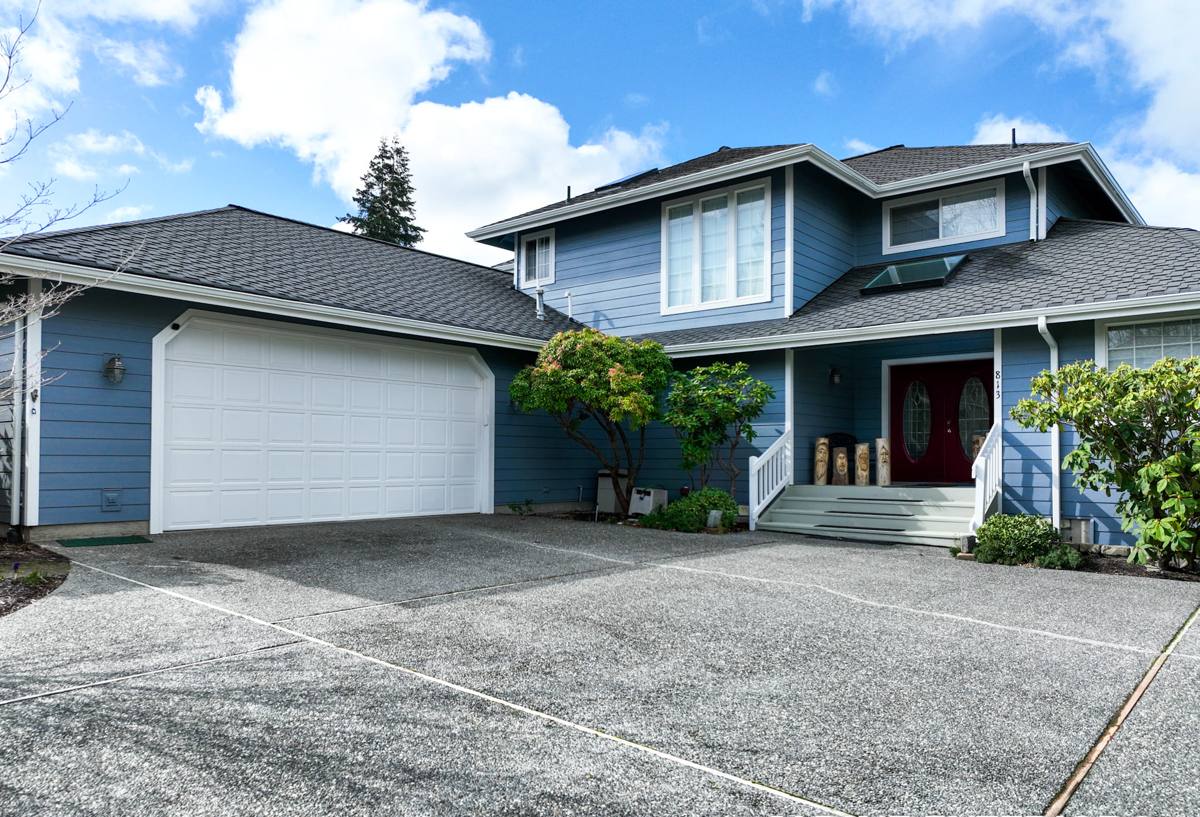
Why New-Construction Windows Are a Different Job Than Replacement
A replacement window goes into an opening that already has a weather barrier and trim in place — the work is largely contained to the existing frame. New-construction windows go in raw openings, with a nailing fin (or flange) that gets integrated directly into the house wrap and flashing system before siding ever goes on. That means:
What's Different
- The rough opening has to be sized, squared, and leveled correctly before the window ever shows up on site.
- Flashing tape and the water-resistive barrier (house wrap) have to be layered in the right order — sill pan first, then jambs, then head flashing lapped over the top — so water sheds down and out, never into the wall cavity.
- Sealant choices and shim placement affect both the weatherproofing and how the window operates for the next 20-30 years.
- There's no existing structure to "match" — every joint and lap has to be built correctly from scratch.
Because everything is exposed and accessible during framing, new construction is actually the best opportunity to get the water management right. It's also the stage where corners get cut most easily, because the wall isn't finished yet and problems don't show up right away.
What Whatcom County Weather Asks of a Window Install
Sudden Valley and the surrounding South Hill area deal with a specific combination of conditions that other parts of the country don't have to plan for as consistently:
Driving Rain
Wind-driven rain doesn't just fall on a window — it pushes against it, testing every seam and lap in the flashing. A sill pan with proper end dams and a slight outward slope is what keeps that water moving out of the wall instead of pooling under the window.
Salt Air
Being close to the water means airborne salt settles on exterior surfaces year-round. Over time it accelerates corrosion on unprotected fasteners and can degrade certain hardware and finishes faster than in an inland climate. Material and fastener choice matter more here than they would fifty miles inland.
Extended Moss and Damp Season
Long stretches of overcast, damp weather mean anything that traps moisture against wood or sheathing stays wet longer before it gets a chance to dry out. That's why drainage — giving water a way out even after the seal does its job — matters as much as the seal itself.
Frame Material: What Actually Holds Up Here
New-construction jobs give you a real choice of frame material, since you're not constrained by an existing opening. For this climate, the trade-offs look like this:
| Material | Moisture/Salt Air Behavior | Maintenance | Trade-offs |
|---|---|---|---|
| Vinyl | Won't rot or corrode; performs well in damp climates | Low — occasional cleaning | More frame flex on larger units; color/finish options more limited |
| Fiberglass | Very stable in wet, temperature-swinging conditions; strong resistance to warping | Low | Higher upfront cost than vinyl |
| Wood-clad | Good performance if the cladding and seals stay intact; interior wood look | Moderate — cladding and seals need periodic inspection | More installation-sensitive; a compromised seal lets moisture reach the wood core |
| Aluminum | Prone to condensation and, in salt air, corrosion unless thermally broken and properly finished | Moderate to high near the water | Not our default recommendation for this specific climate without a thermal break |
We don't push one brand or material on every job — the right call depends on your budget, the home's design, and how exposed the building site is to wind and rain. What we do insist on is a frame and glazing package rated for the moisture load this area actually sees, not just a builder-grade minimum.
Glazing Notes for This Climate
Double-pane, low-E glass with an argon fill is the standard baseline for new construction here, and it's adequate for most South Hill builds. On west- and south-facing walls that catch more driving rain, we'll also talk through upgraded spacer systems, which resist seal failure (the cause of that foggy, moisture-between-the-panes look) longer than basic aluminum spacers in a climate with this many wet-to-dry cycles.
Our New-Construction Window Process
The sequence matters as much as the materials. Here's how we handle it:
- Rough opening check. Before any window arrives, we verify the opening is square, level, and sized to the manufacturer's tolerance — not just "close enough."
- Sill pan flashing. A sloped, end-dammed sill pan goes in first, so any water that gets past the window has a built-in path back outside.
- Weather-resistive barrier integration. House wrap and flashing tape are layered shingle-style — each piece overlapping the one below it — so water always sheds downward and outward, never up under a lap.
- Window set and shim. The unit is set plumb, level, and square, shimmed at the manufacturer's specified points to avoid frame distortion, and fastened per the window's engineering, not by habit.
- Head flashing. Installed last over the top of the window and lapped under the house wrap above it, closing the drainage plane.
- Sealant and backer rod. Applied at the specified joints only — over-sealing a window can trap water instead of keeping it out, which is a common mistake we correct on other contractors' work.
- Final inspection. We check operation, seal continuity, and flashing laps before siding crews close the wall.
Signs a New-Construction Window Job Was Done Right
If you're a homeowner or builder overseeing this stage of the project, here's what to look for before the wall gets closed up:
- Sill pan flashing is visible under the window with a clear slope to the outside
- House wrap laps are shingled correctly — top pieces over bottom pieces, never reversed
- No foam or caulk fully filling the sill area (it should drain, not seal solid)
- Shims are placed at structural points specified by the manufacturer, not randomly
- Head flashing is tucked under the barrier above it, not just caulked on top
- Windows open, close, and lock smoothly with no binding after being fastened in place
If a crew can't walk you through this sequence when asked, that's worth pausing on before the siding goes up and covers the evidence either way.
Timing Windows Into Your Build Schedule
New-construction windows need to land on site after framing is complete but before house wrap and siding move forward — a narrow window in the schedule where delays cascade fast. Custom sizes and certain frame materials can carry longer lead times, especially fiberglass or upgraded glazing packages. We build order timing into the framing schedule up front rather than scrambling once the crew is standing around waiting on product, which is a common source of delay on new builds in this area.
Why a Crew That Already Works South Hill Matters
General window knowledge gets you most of the way, but the details that actually prevent callbacks come from installing in this specific area repeatedly — knowing which orientations on a given lot catch the worst of the driving rain, how the moss and damp season here affects drying time between installation steps, and which frame and glazing packages hold up over years rather than just passing a first inspection. A crew that regularly works Sudden Valley and the broader South Hill area has already seen how these homes perform through a few wet seasons, not just at handoff.
We also coordinate directly with builders and general contractors on new-construction timelines, so window installation fits the framing schedule instead of holding it up — and so the flashing and drainage details get inspected and photographed before they disappear behind siding.
Get a Straight Answer for Your Build
Every new-construction project is different — lot exposure, home design, and budget all factor into the right window and installation approach. If you're planning or already framing a home in South Hill, we're happy to walk the site, look at your plans, and give you a straightforward, no-pressure estimate using the form below.