 Sudden Valley
 Why Sunnyland Windows Need to Be Built for This Climate
Homes in the Sunnyland area deal with a specific combination of weather stress that most window manufacturers design around, but not always around correctly. Salt-laden air moving in off the water accelerates corrosion on hardware and fasteners. Driving, wind-pushed rain finds any weak point in a window's seal or flashing, not just the parts facing the weather. And Whatcom County's long, damp moss season means anything shaded or slow to dry — including window sills, trim, and corners — stays wet longer than homeowners expect. None of this is exotic. It's just consistent, and consistency is what wears windows out early.
The result we see most often on older Sunnyland homes isn't dramatic failure — it's slow, quiet performance loss. Seals give out a few years before they should. Wood sills start holding moisture instead of shedding it. Single-pane or early dual-pane units that were fine when installed now let in more cold air and more sound than a modern window would. Energy-efficient replacement windows address the comfort and utility-bill side of that, but done right, they also address the moisture and corrosion side — which is really the bigger long-term issue for a house in this climate.
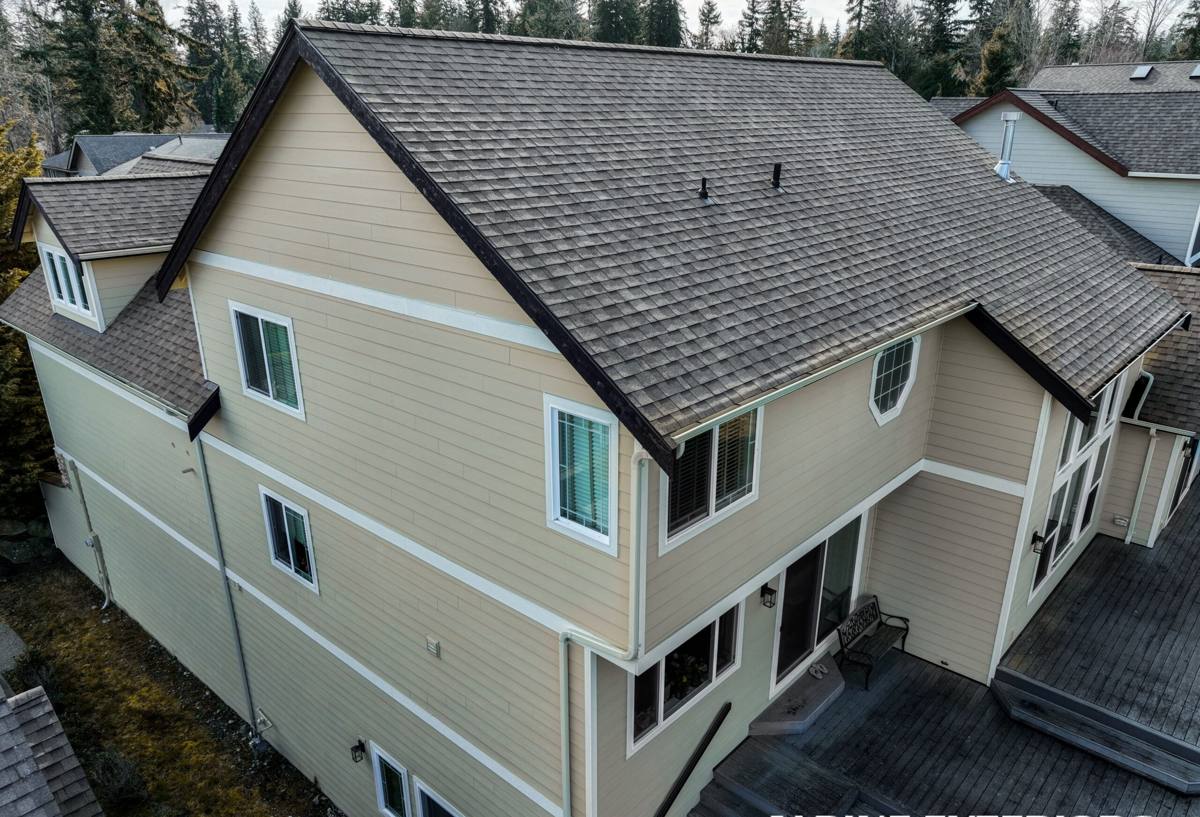
What "Energy-Efficient" Actually Means for a Home Here
Energy-efficient is a specific, measurable thing, not a marketing label. For a marine climate like ours, three ratings matter more than the rest:
- U-factor — how much heat escapes through the window. Lower is better for our cool, wet winters.
- Solar Heat Gain Coefficient (SHGC) — how much solar heat passes through. Less critical here than in sunnier climates, but still worth balancing against year-round comfort.
- Condensation Resistance — how well the window resists interior fogging and moisture buildup. This one gets overlooked, and it shouldn't. High humidity and cool glass surfaces are a recipe for condensation, which over time damages sills, sashes, and interior paint.
Double-pane windows with a quality Low-E coating and an argon gas fill cover most of what a Sunnyland home needs. Triple-pane can make sense on a north-facing wall or a particularly drafty older home, but it adds weight, cost, and isn't always the right trade-off. We'll walk through what your specific windows and orientation call for rather than defaulting to the most expensive option.
Signs Your Current Windows Are Costing You Comfort and Money
Most homeowners don't replace windows because one broke — they replace them because a handful of small, low-grade problems finally add up. Look for these:
- Noticeable draft or cold air near the window even with it fully closed
- Fogging or moisture trapped between panes on dual-pane units (a sign the seal has failed)
- Windows that stick, won't stay open, or are hard to lock
- Visible staining, soft spots, or dark streaking on wood sills or trim
- Condensation collecting on the inside of the glass regularly, especially in winter
- Higher heating bills than similar-sized homes nearby, with no other clear cause
- Moss or algae growth on trim directly below or beside the window
Any one of these on its own isn't an emergency. Several of them together, especially on windows over 15-20 years old, usually means replacement will pay for itself faster than continuing to patch and re-caulk.
Choosing Frame Material and Glass for a Marine Climate
Frame material matters as much as the glass package, especially with the moisture load this area sees. Here's how the common options compare for a home like yours:
| Frame Material | Moisture Performance | Maintenance | Typical Lifespan |
|---|---|---|---|
| Vinyl | Excellent — won't rot, doesn't corrode | Low — occasional cleaning | 20-30+ years |
| Fiberglass | Excellent — very stable in wet/dry cycles | Low | 30-40+ years |
| Wood / Wood-Clad | Good if maintained; vulnerable if seals or paint fail | High — regular painting, caulk checks | 15-25 years without diligent upkeep |
| Aluminum | Fair — prone to condensation without thermal break | Low-moderate | 20-30 years |
We lean toward vinyl and fiberglass for most Sunnyland installations, not because wood windows are a bad product, but because our professional standard prioritizes low ongoing maintenance in a climate that punishes anything that needs regular repainting or resealing. If you want the look of wood on the interior, clad options can split the difference — wood inside, a weather-resistant material outside. We'll be upfront with you about the maintenance commitment either way.
Glass Packages Worth Discussing
Beyond frame material, ask about Low-E coating type, spacer material (warm-edge spacers reduce condensation at the glass edge, which matters here), and whether the unit is rated for our specific climate zone. A window that performs great in a dry climate isn't automatically the right pick for a wet, cool one.
How We Approach a Sunnyland Window Installation
Assessment and Measurement
We start by looking at the existing opening, not just the window itself — checking for rot, soft framing, or prior water intrusion that needs to be addressed before a new window goes in. Installing a great window into a compromised opening just delays the same problem.
Flashing and Weatherproofing
This is the step that determines whether a window lasts 25 years or leaks in year three. Correct flashing sequencing — so water is always directed out and down, layer over layer, never trapped behind the siding — matters more here than in drier climates because driving rain will find any shortcut. We integrate flashing with the existing weather-resistive barrier rather than just caulking around the edges and calling it done.
Installation and Sealing
The window is set plumb, level, and square, shimmed correctly so it operates smoothly for years, then insulated and sealed with materials rated for exterior use. Interior and exterior trim is finished to match your home.
Cleanup and Walkthrough
We walk every window with you — operation, locks, and a look at the finished exterior seal — before we consider the job done.
Why Flashing and Moisture Management Matter More Here
A window failure almost never starts with the glass. It starts with water getting behind the trim through a flashing detail that was skipped or done out of sequence. In a climate with this much sustained damp and moss growth, a small gap that would dry out quickly somewhere else can stay wet for weeks. That's how you end up with soft framing hidden behind a window that still looks fine from the outside. Getting the flashing and sealing right the first time is, honestly, more important to the long-term health of your home than which brand of glass you choose.
What Affects the Cost of Window Replacement in Sunnyland
| Factor | Why It Matters |
|---|---|
| Number and size of windows | Larger openings and full-home replacements shift the per-unit price and scheduling |
| Frame material | Vinyl is typically the most budget-friendly; fiberglass and clad wood cost more upfront |
| Glass package | Triple-pane, upgraded Low-E, or specialty coatings add cost per unit |
| Condition of the opening | Hidden rot or framing repair adds labor beyond the window itself |
| Access and story height | Second-story or hard-to-reach windows take more time and equipment |
| Trim and siding tie-in | Matching existing trim or siding profiles affects finish work |
As a broad range, homeowners in this area typically see installed costs somewhere in the neighborhood of $600 to $1,400 per window depending on size, material, and site conditions — full-home projects and larger or specialty units can run higher. We'll give you an itemized number for your specific home rather than a generic estimate, because these factors genuinely move the price.
Why Hire a Crew That Already Works This Area
Windows installed by a crew unfamiliar with wind-driven coastal rain and Whatcom County's moss cycle tend to show problems within a few years — not because the product was bad, but because the flashing and sealing detail wasn't matched to local conditions. We work Sudden Valley and the surrounding Bellingham-area neighborhoods regularly, which means we're not guessing at how water moves across your specific type of siding or how much shade and moisture a given wall sees through the winter. If your property is part of a homeowners or community association with exterior-change guidelines, we can also help make sure your project fits within those requirements before work begins.
Maintaining Your New Windows Through Moss Season
Even a well-installed, low-maintenance window benefits from a little seasonal attention here:
- Clear weep holes along the bottom of the frame so water can drain instead of pooling
- Rinse trim and sills where moss or algae tends to collect, especially on shaded walls
- Check exterior caulking annually and touch up any cracked or separated sections
- Keep gutters and downspouts clear so splash-back doesn't hit window trim directly
- Wipe down interior sills if you notice condensation building up during cold snaps
None of this is heavy maintenance — it's the difference between a window that looks and performs the same in year fifteen and one that starts showing its age in year five.
If your Sunnyland home has drafty, foggy, or hard-to-operate windows, we're happy to take a look and give you a straightforward, no-pressure estimate. Use the form below to get started.